

 Alex
Habibi
Alex
Habibi
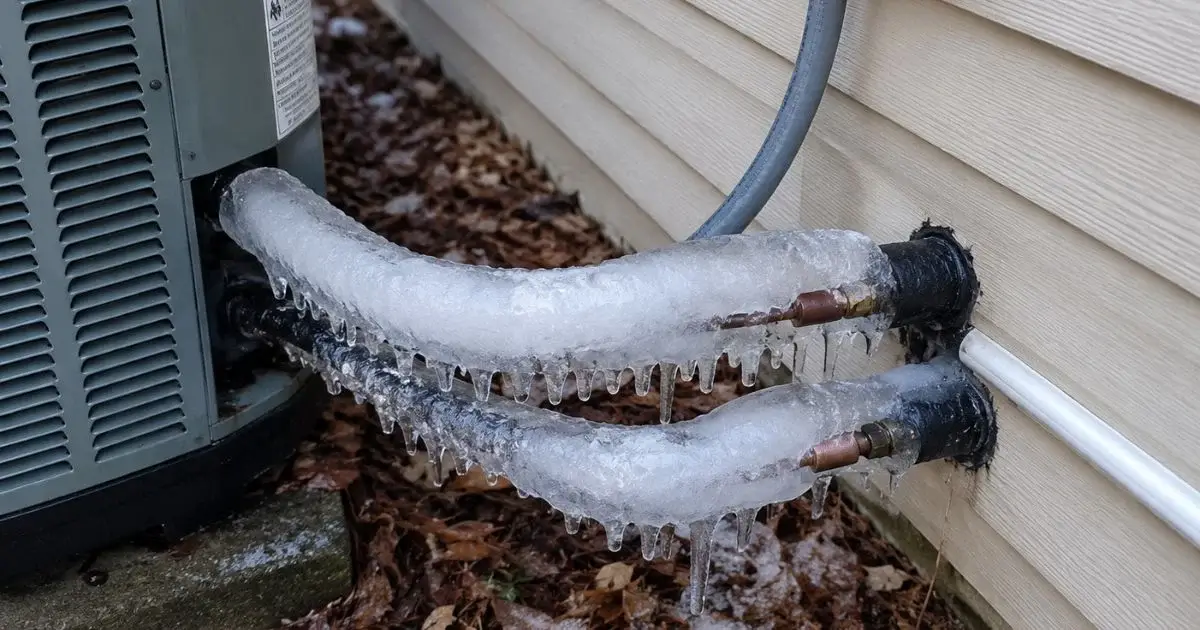
You walk outside to check on the AC unit, and there's ice coating the refrigerant lines. Not frost. Actual ice buildup running from the outdoor unit back toward the house. The system's still running, but inside the house feels warmer than it should, and the longer it runs like this, the more damage accumulates.
That air conditioner covered in ice isn't working harder to cool your home. It's actively failing. Ice means airflow is restricted or refrigerant is low, and when the coils freeze because they can't absorb heat properly, the system enters a destructive cycle it can't escape on its own.
The system pulls moisture from the air, freezes it onto the coils, and blocks more airflow. The problem compounds from there. A frozen coil stresses the compressor, and if you let it run long enough in that condition, you're looking at compressor failure instead of a simple fix. Here's what causes it and how to stop it before the damage costs you thousands.
What's Happening When Your AC Freezes
Air conditioning moves heat instead of generating cold. The evaporator coil absorbs heat from air passing over it and transfers that heat outside through refrigerant. When airflow drops or refrigerant pressure falls, coil temperature drops below freezing and moisture freezes onto the surface.
Natural Resources Canada notes that AC systems operating outside their design parameters lose efficiency rapidly, which is exactly what happens when ice blocks airflow and the system can't exchange heat properly.
Ice blocks more airflow, which makes the coil get colder, which creates more ice. The cycle repeats until the entire coil is encased and no air moves at all. You're not getting cooling at that point.
The compressor keeps running, trying to circulate refrigerant through a coil that can't absorb heat. That strains it. Run it long enough and you burn out the compressor, which typically costs $1,500–2,500 to replace depending on the unit.
Why Your Frozen Air Conditioner Started with a Dirty Filter
The most common reason for a frozen air conditioner is a clogged filter. Your system needs a specific volume of air moving across the evaporator coil to maintain proper heat exchange. When the filter blocks that airflow, the coil can't absorb enough heat, surface temperature drops below 32°F, and moisture freezes.
That ice layer blocks even more airflow, which makes the problem compound. Filters don't fail suddenly. They build up dust and debris over weeks, airflow drops gradually, and the coil runs colder.
By the time you notice ice, the filter's been restricting flow for a while and the blower motor's been working harder to compensate. Homeowners in Kitchener-Waterloo dealing with humid summers see this pattern regularly. High humidity means more moisture in the air, which accelerates filter clogging and increases the amount of ice that forms once the coil drops below freezing.
Environment Canada data shows Southern Ontario experiences consistently high humidity levels during summer months, which puts extra demand on AC systems. A filter that might last three months in a dry climate need changing every 30–45 days here.
When Low Refrigerant Causes AC Coils Freezing
Refrigerant doesn't get used up because it circulates in a closed loop. If your system's low on refrigerant, there's a leak somewhere. Low refrigerant pressure drops the coil temperature below where it can absorb heat efficiently, causing AC coils freezing even with clean filters and proper airflow.
A refrigerant leak often shows up as ice forming on the larger refrigerant line running from the outdoor unit back to the air handler. You might also notice the outdoor unit running continuously without cooling the house effectively. That's the compressor trying to move refrigerant that isn't there.
Sometimes you hear hissing near the outdoor unit or see oil stains around fittings and connections. Refrigerant work requires a licensed technician. Adding refrigerant without finding and fixing the leak just delays the same failure. The system loses refrigerant again, freezes again, and you're back where you started, except now the compressor's been running low on refrigerant, which shortens its lifespan.
Technicians use leak detectors and pressure testing to find where refrigerant is escaping pinhole leaks in coils, cracked fittings, corroded connections. Once the leak's sealed, they evacuate the system, verify it holds vacuum, then recharge to manufacturer specification. That's not a DIY job. Refrigerant handling requires certification, and mistakes create safety hazards and environmental violations.
Blocked Return Vents and Airflow Problems
Your AC needs return air to function. If return vents are blocked by furniture, rugs, or closed doors in too many rooms, the system can't pull enough air across the evaporator coil. Reduced airflow drops coil temperature, and ice forms.
Homes built in Kitchener-Waterloo before 1980 often have undersized return ducts. One small return vent tries to pull air from the entire second floor. Existing duct systems often suffer from design deficiencies in the return air system, particularly in older homes. When you upgrade to a modern high-efficiency AC without fixing the return airflow problem, the new system can't move the volume of air it needs, the coil runs cold and freezes, and the efficiency you paid for disappears.
Closing too many supply vents creates a similar problem. Homeowners close vents in unused rooms thinking it saves energy, but it throws off the system's airflow balance. The blower motor fights increased static pressure, airflow drops at the coil, and freezing starts.
How to Fix Frozen AC Coils Without Causing More Damage
Turn the system off at the thermostat, not fan mode but off completely. Running with frozen coils stresses the compressor and can cause liquid refrigerant to flood back into it, damaging internal components.
Let the ice melt naturally, which takes 4–8 hours depending on how much formed. Don't chip it off and don't pour hot water on the coils because you'll damage the fins or crack the coil. You can run the furnace blower fan (heat off, fan set to ON) to speed up the thaw if you need air circulation. Don't restart cooling until the ice is completely gone.
While it's melting, check the filter and replace it if it's clogged. Check all return vents and make sure they're not blocked. Open any supply vents you've been keeping closed, and if the filter was clean and vents are clear, the problem's refrigerant or a failing component.
Blower Motor Problems That Cause Freezing
A failing blower motor can't move the volume of air your AC needs, even with clean filters and open vents. Motors don't usually fail instantly but slow down over time as bearings wear, capacitors weaken, and the motor runs at reduced speed. Airflow drops below what the system requires, and the coil freezes.
You might hear the blower struggling to start, running louder than normal, or cycling on and off irregularly. Those are signs the blower motor is wearing out, and by the time ice appears, the motor's been underperforming for weeks. Replacing a blower motor before it fails completely is cheaper than replacing a compressor damaged by running with frozen coils.
Some motors have multiple speed settings controlled by the thermostat. If the motor's stuck on low speed or not switching properly between cooling and heating modes, airflow stays insufficient and freezing happens even when the motor technically runs. That needs diagnosis because the motor itself might be fine, but the control board or relay is failing.
What Needs a Technician vs. What You Can Fix
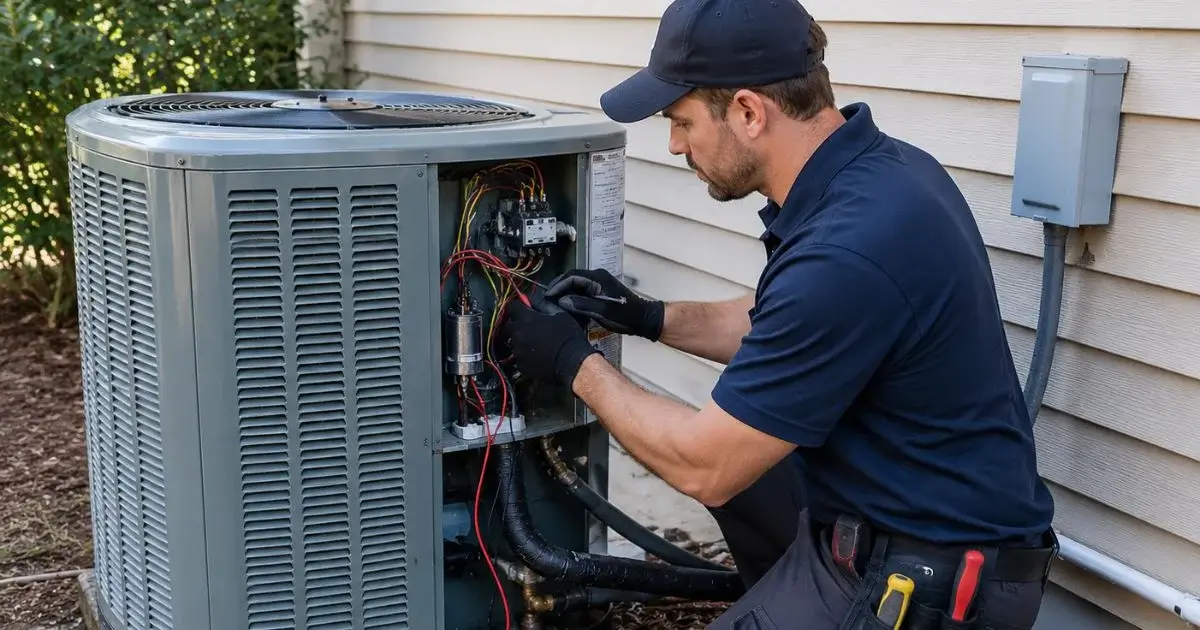
You can handle filter replacement, vent clearance, and thermostat settings. If the system thaws, you replace the filter, and it runs normally afterward, the filter was the problem. If it refreezes within 24 hours with a new filter and clear vents, call a technician.
Refrigerant leaks, blower motor failures, expansion valve problems, and coil obstructions need professional diagnosis. A technician checks refrigerant pressures, measures airflow across the coil, tests the blower motor, and inspects for internal blockages you can't see from outside the unit.
An air conditioner covered in ice that keeps recurring points to a systemic issue like undersized ductwork, a failing blower motor, or refrigerant loss. Repeatedly thawing and restarting doesn't fix the underlying cause, and the compressor takes damage every freeze cycle.
Why This Matters in Ontario Summers
Southern Ontario summers hit 30–35°C with high humidity, which means AC systems run longer cycles than in drier climates and more hours for a failing component to cause damage. A system that freezes in late June and runs all July with reduced capacity isn't just uncomfortable but wearing out faster.
The pattern across Kitchener, Waterloo, Cambridge, and Guelph is predictable. AC failures spike during the first heat wave of the season, when systems that barely survived last summer start showing problems after being pushed hard in May and June. Ice buildup in air conditioner systems is often the first visible sign that something internal has been deteriorating.
Catching problems early through pre-season AC checks can prevent ice buildup before it happens. Catching a frozen coil early makes a difference when you replace the filter, fix airflow, and address refrigerant loss before the compressor fails. That's the gap between a minor repair and a major replacement.
A frozen AC isn't something you ignore and hope fixes itself. If you've thawed the system, replaced the filter, and it's still freezing, have it diagnosed before the compressor fails. Infiniti's technicians handle refrigerant leaks, airflow restrictions, and component failures across Kitchener, Waterloo, Cambridge, and Guelph with 24/7 availability. Call 519-741-5100.